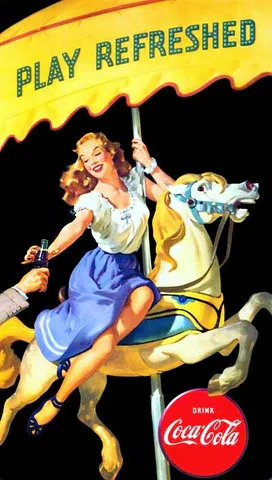
you’ve seen these paintings before. even if you don’t know the artist’s name, you’ve seen them. a woman in a dress, perfect hair, perfect face, perfect everything. that’s pin-up art. and the artist? gil elvgren.
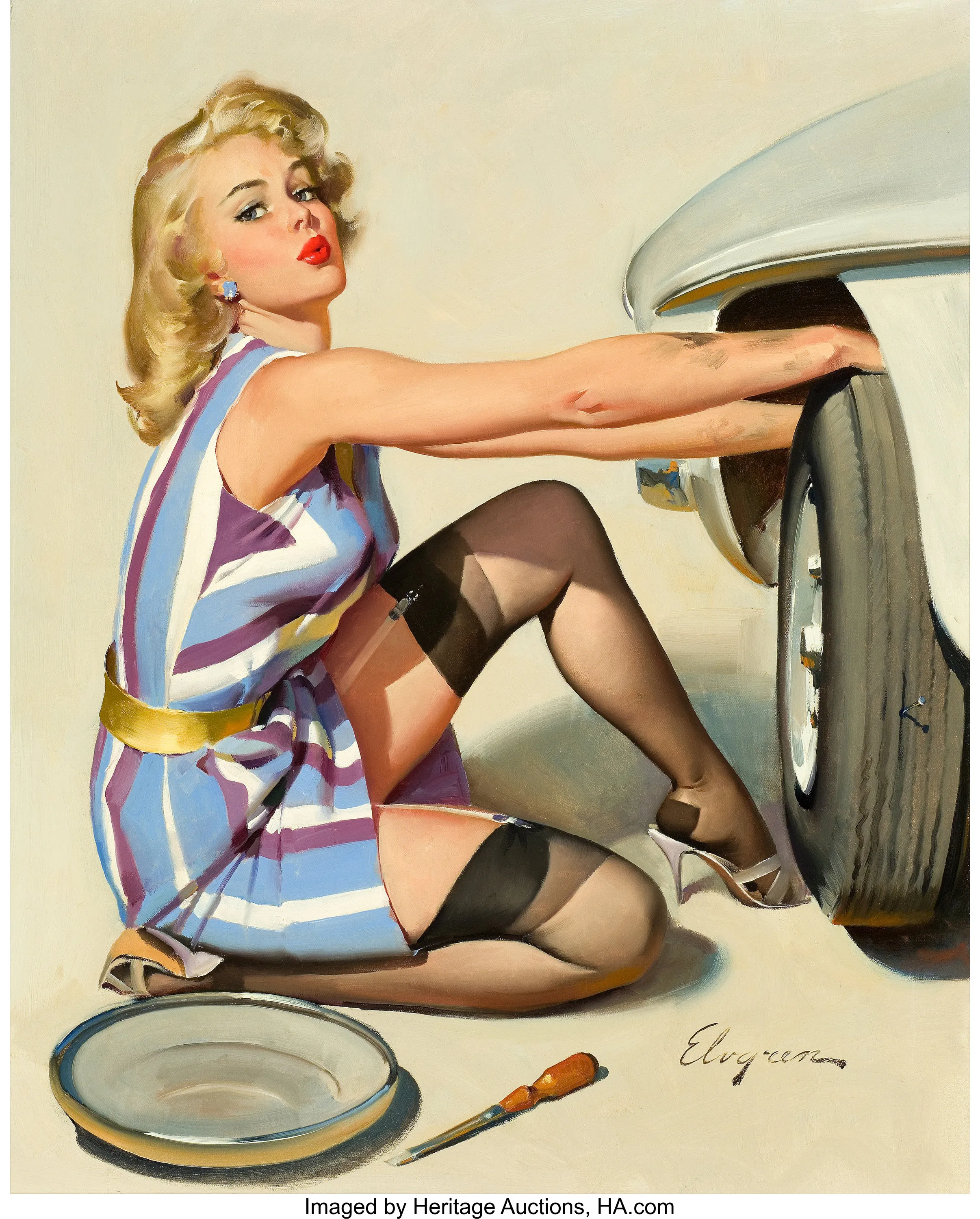
gil elvgren wasn’t just an artist. he was an artist who defined beauty for a whole generation. from the 1930s to the 1970s, his paintings were everywhere. calendars, magazines, ads.
i mean, if you saw a pin-up girl in america, it was probably elvgren’s painting. that’s how big he was.
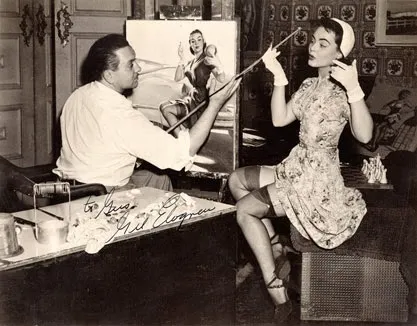
the master at work
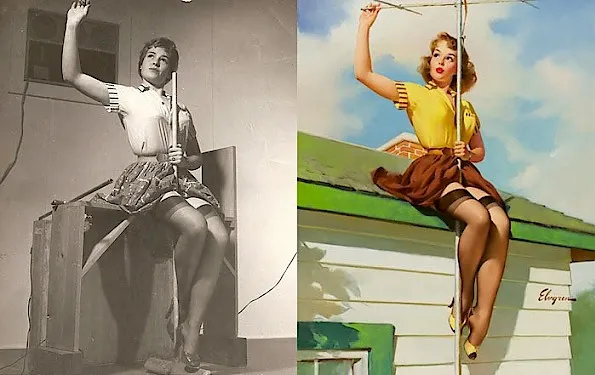
elvgren worked with real models, took photos, then painted from them using oil. but he didn’t just copy. he made everything better. better proportions, better lighting, better everything. he created a fantasy, not a reality.
but the way he painted fabric, how light hit skin, the movement. this was good work, no matter what you think about the subject.
the psychology of it
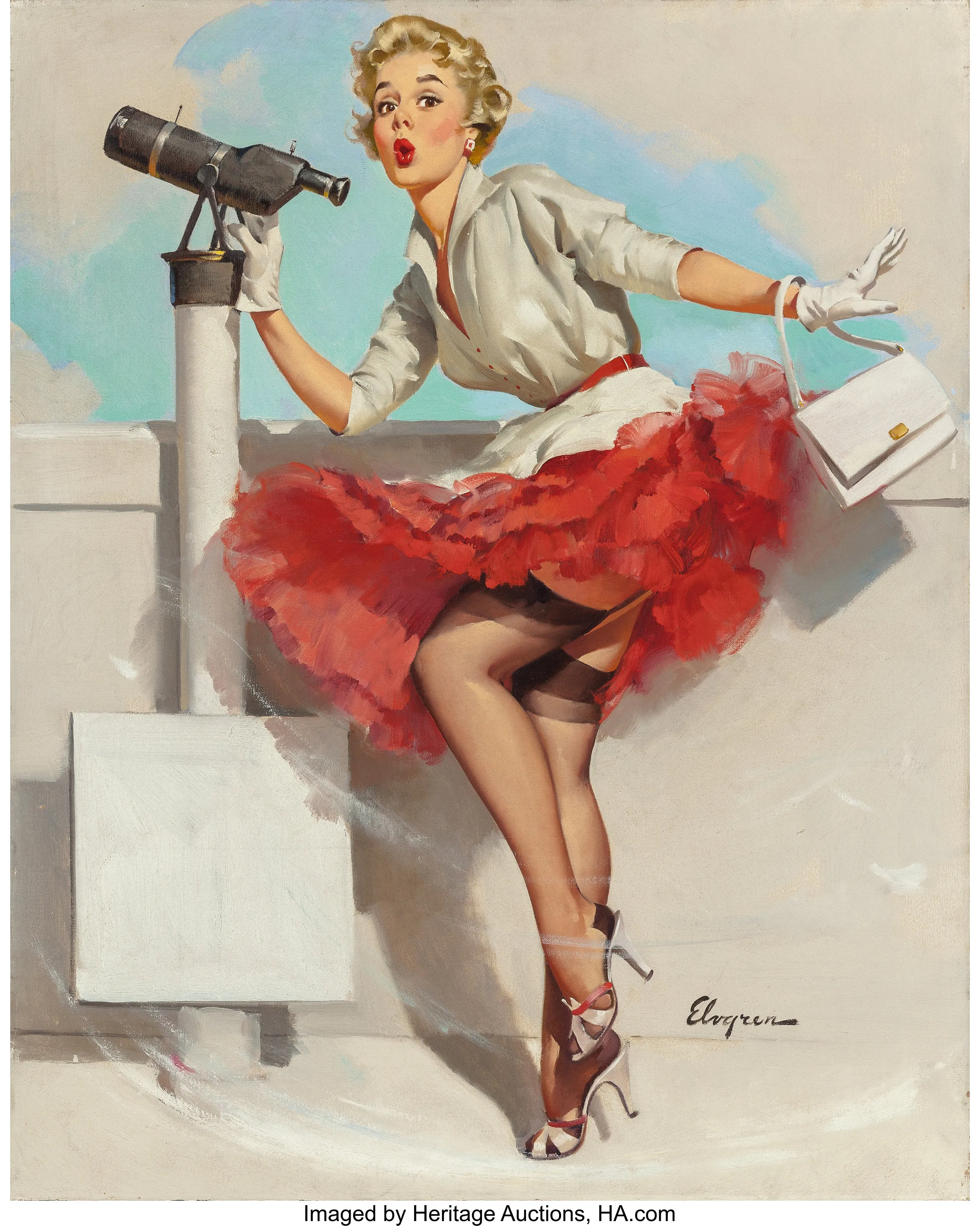
why did pin-ups work so well? it’s about the tease. they weren’t showing everything. a skirt flying up, a surprised face, that moment right before. your mind does the rest. and that was on purpose.
innocent enough for a random barber shop, suggestive enough to sell. that’s why it worked.
nose art and the war
during world war ii, soldiers painted pin-ups on their planes. they called it nose art. almost every plane had a girl on it.
why? they wanted something beautiful to see. something to remind them why they’re there. home. life. normal stuff.
so these weren’t just paintings. they were hope. their motivation was to get back to that life. and it actually worked.
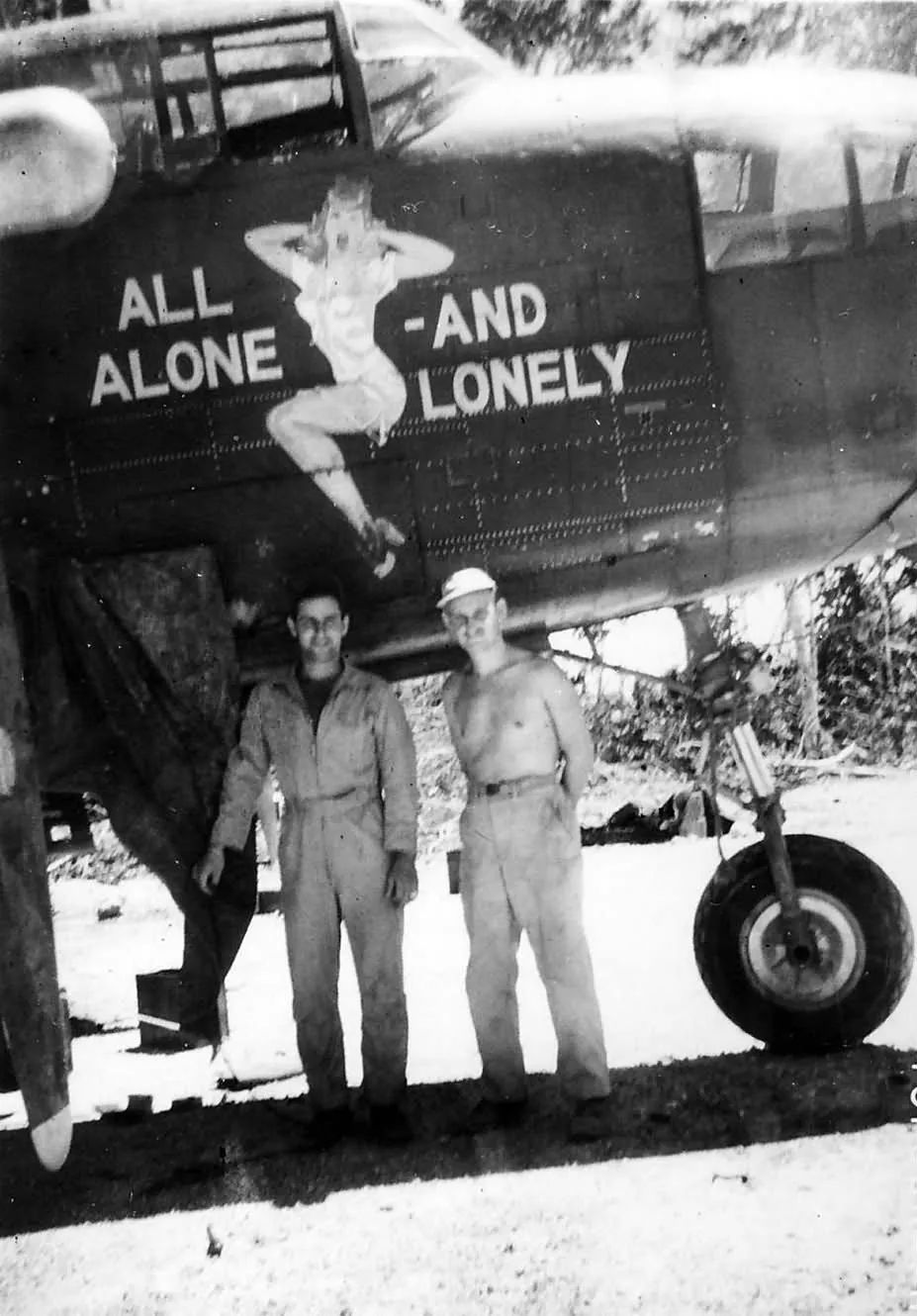
most nose art was copied from elvgren or similar artists. so yeah, elvgren’s work went to war with them.
by the way, the word “pin-up” also comes from the soldiers, because they were cutting the pin-up girls out of the magazines and putting them on the walls of their barracks. so these girls were everywhere. from walls, to planes. from ads, to calendars.
the marilyn connection
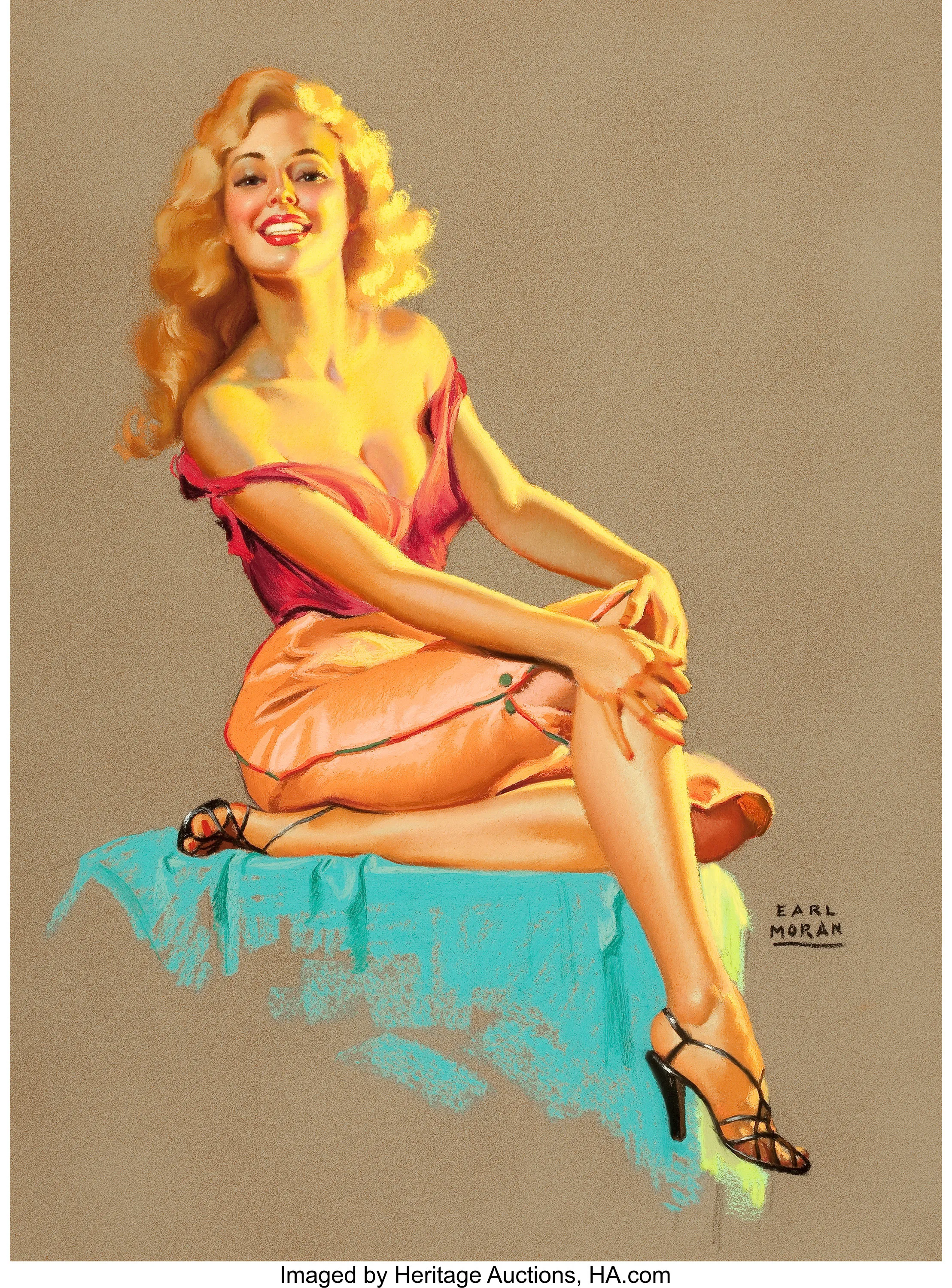
marilyn monroe started as a pin-up model. her name was norma jeane before the movies, before the fame. she was posing for pin-up photos, and earl moran was the artist who usually painted her.
when she became a star, she kept the same pin-up style. you might know the dress scene in “the seven year itch”? that’s elvgren in real life. she was really smart and used it to her advantage.
the artistic side
people argue if pin-ups are art. honestly? who cares. look at an elvgren painting close. you’ll see the skill.
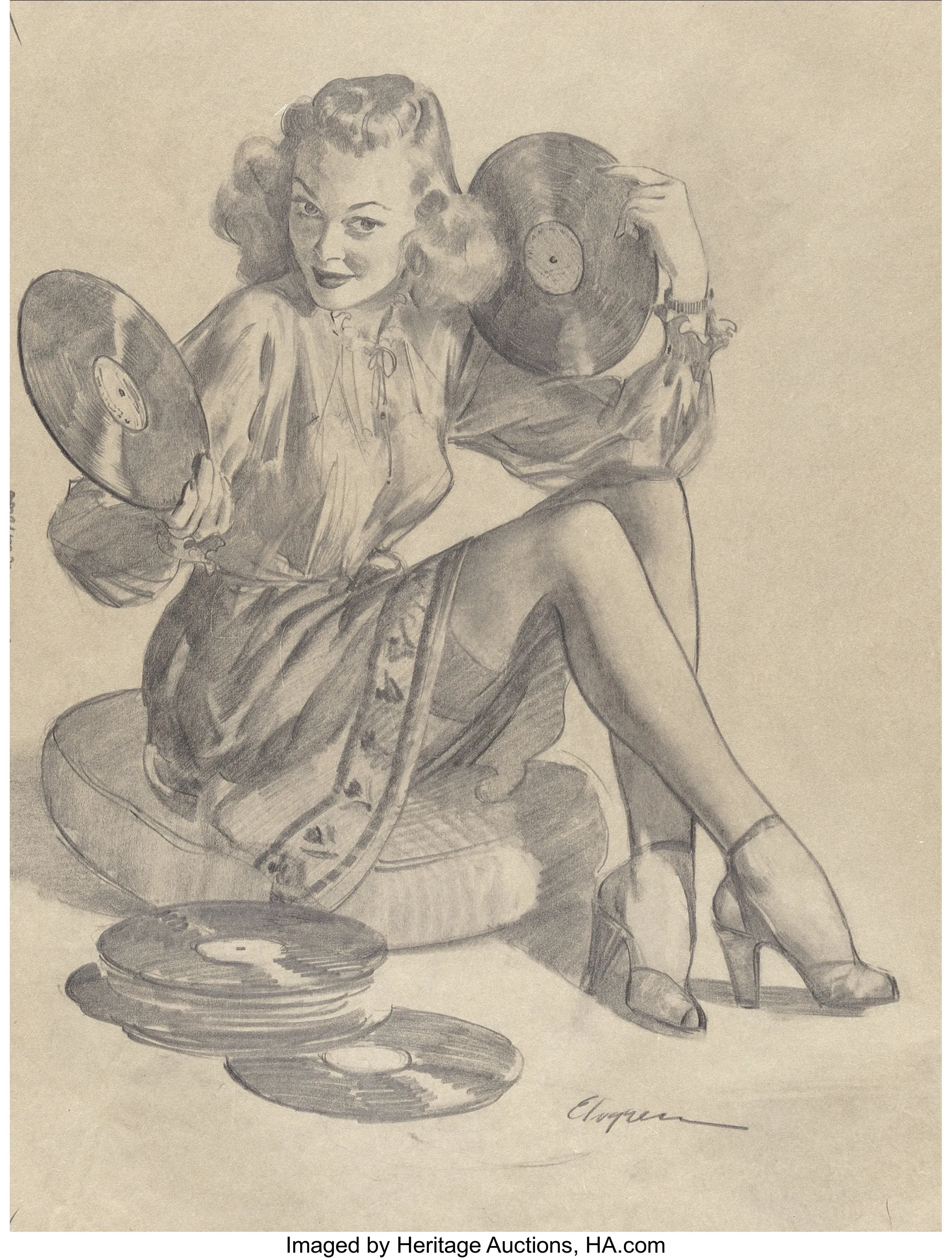
yes, it was commercial. it used to sell something. however, it’s art and that’s what we should appreciate.
i know pin-ups are also problematic. made by men, for men. the women are always showing their legs, always surprised, always thin, always white, always one specific look. this is what we call objectification.
but you can appreciate the skill and see the problems at the same time. yes, objectification was the other side of the coin, but don’t let that stop you from appreciating the skill. because nothing is completely black or white.
the end
elvgren died in 1980, but you can still see his work in random places like restaurants, bars, and even repair shops. not like other art, it’s not only in museums. this alone is enough to show how big its impact was.
if you like it, you like it. if you don’t, you don’t. it’s your choice.
personally, i like it. i like the skill, i like the history, i like the impact. i like the art. that’s all.